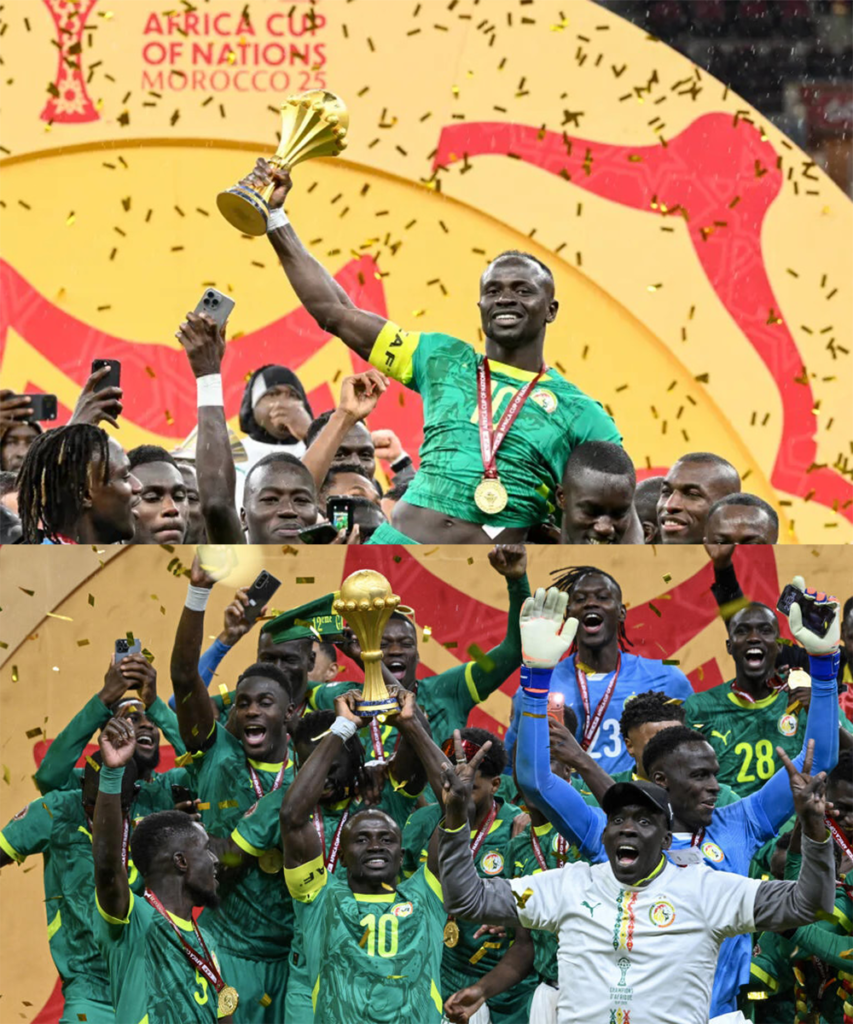
Following the contentious Africa Cup of Nations (AFCON) 2025 final, which will be remembered more for its off-field drama than its on-field action, the Confederation of African Football (CAF) has imposed a broad range of disciplinary measures on Senegal and Morocco. Senegal eventually won the championship with a thrilling 1-0 victory in extra time, but the circumstances leading up to the game clouded the joy and prompted a significant disciplinary action from CAF.
A Final Marred by Controversy
The AFCON final, which took place in Rabat, Morocco, on January 18, 2026, was an exciting ninety minutes of football that ended with Senegal’s extra-time goal by Pape Gueye.
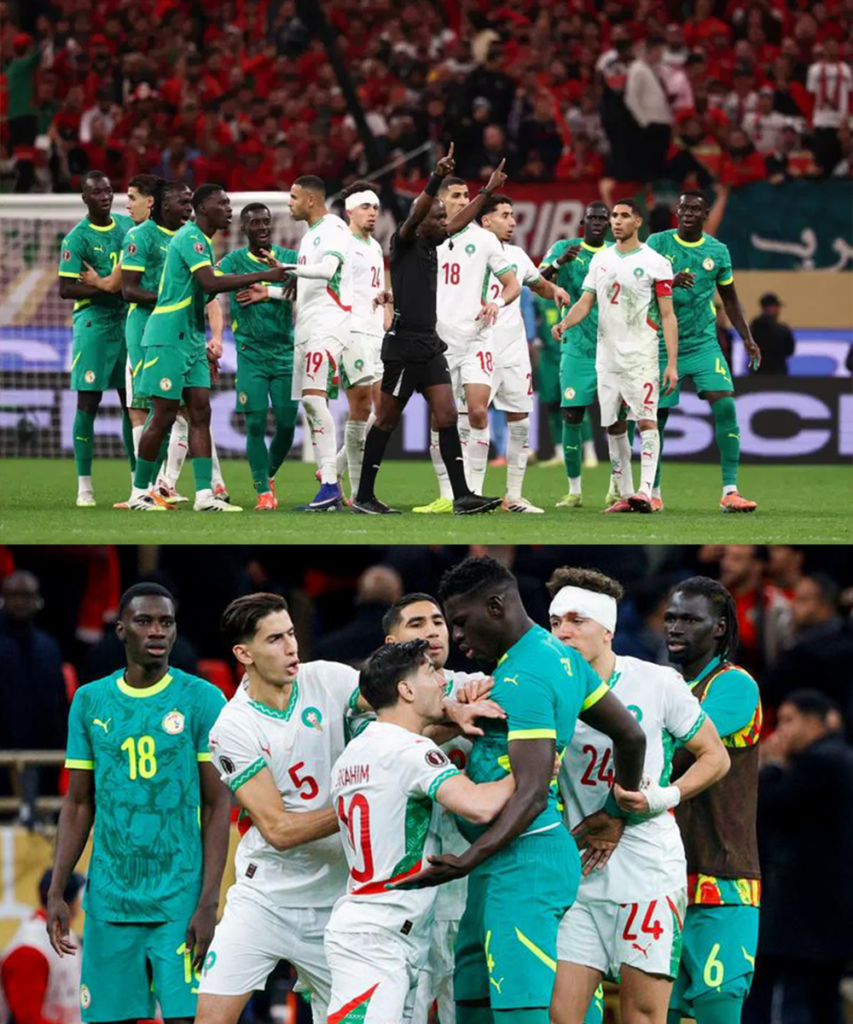
But late in the game, a number of controversial refereeing calls, including as a penalty granted to Morocco by VAR and a goal disallowed by Senegal, led to strong protests from both players and officials.
There was a considerable delay before play started again after Senegal’s players briefly left the field in protest.
Later, CAF determined that this action and other events violated its disciplinary code’s fundamental values of integrity, loyalty, and fair play. The behavior of players, officials, and spectators “brought the game into disrepute,” according to the governing body.
Sanctions on Senegal: Heavy Penalties and Bans
Senegal was hit with some of the most severe penalties following the disciplinary review:
- Coach Pape Bouna Thiaw received a five-match ban from all official CAF competitions and was fined USD 100,000 for unsporting conduct and bringing the game into disrepute.
- Iliman Cheikh Baroy Ndiaye and Ismaïla Sarr were each suspended for two CAF matches for unsporting behaviour toward the referee.
- The Fédération Sénégalaise de Football (FSF) was fined a total of USD 615,000 — including USD 300,000 for improper conduct by supporters, USD 300,000 for unsporting behaviour by players and staff, and USD 15,000 for team misconduct after multiple yellow cards.
These penalties reflect a strong stance by CAF against actions seen as undermining the sport’s values, especially in a match watched by millions across the continent.
Morocco Also Faces Significant Sanctions
Although Morocco did not protest as dramatically on the field, its team and federation were not spared from disciplinary action:
- Defender Achraf Hakimi was suspended for two official CAF matches, with one match suspended on probation, due to unsporting behaviour.
- Midfielder Ismaël Saibari received a three-match ban and was fined USD 100,000 for his conduct during the final.
- The Fédération Royale Marocaine de Football (FRMF) was fined a total of USD 315,000 for multiple breaches, including ball boys’ inappropriate behaviour, player and staff interference with the VAR review area, and the use of lasers by fans — all seen as contributing to match disruption.
CAF stressed that actions like interfering with VAR operations and distracting players with lasers represented serious disciplinary offences.
Morocco’s Protest Rejected — Senegal’s Title Stands
The CAF Disciplinary Board upheld Senegal as the legitimate 2025 champions and confirmed the 1-0 outcome, rejecting Morocco’s official petition to have Senegal stripped of the title in addition to fines and suspensions.
Reactions and Broader Implications
The wide range of penalties is a reflection of CAF’s efforts to uphold disciplinary standards at the most prominent African football competition. The rules are crucial to preserving the integrity of the game and guaranteeing respect for both opponents and match officials, officials emphasized.
Fans and governments throughout the continent have responded to the fallout. While Morocco’s football administrators insisted that the spirit of African unity must remain despite the disconcerting events, Senegalese political leaders called the episodes “painful” and urged calm.
Looking Ahead
While the punishments only apply to CAF competitions and have no bearing on Senegal’s participation in future World Cup qualifiers or global events, they serve as a clear signal to teams about the repercussions of unsportsmanlike behavior. With Senegal and Morocco poised to be significant on the continental and global football arenas, how they respond to these verdicts may influence their reputations and performance in upcoming tournaments.